Cold laser therapy Louisville patients ask about is a gentle, drug-free way to ease pain and support healing with light. You may also hear it called low-level laser therapy (LLLT) or photobiomodulation. Here is how it works, how it differs from the higher-power Class IV lasers we use most often, and how to decide which is right for you.
What is cold laser therapy?
Cold laser therapy uses low-power red and near-infrared light to stimulate cells. It is called “cold” because the power is too low to heat tissue noticeably. Photobiomodulation may influence mitochondrial activity and cell signaling involved in inflammation and tissue repair, although the response depends on the treatment settings and the condition.
How cold laser therapy Louisville patients receive actually feels
You feel very little. Some people notice a faint warmth or tingle. There are no needles, no medication and no downtime. Sessions are quick, and you can drive yourself home or go back to work.
Cold laser vs. Class IV laser
Therapy lasers are grouped by power output. Cold lasers are usually Class III, under half a watt. Class IV lasers run at higher power.
Depth and speed
A higher-power laser can deliver more energy in less time, but treatment depth and effectiveness also depend on wavelength, tissue and the dose delivered. A Class III laser may need longer treatment time to deliver the same energy.
Sensation
Class IV treatment usually feels like a soothing warmth. The handpiece keeps moving so the skin stays comfortable.
Best fit
Both low-power and Class IV lasers are used for musculoskeletal conditions, and neither has been shown to be universally better for shallow or deep problems. We have both, and Dr. Rosum chooses based on your condition. Learn more about our Class IV laser therapy.
What conditions can laser therapy help?
- Arthritis and joint stiffness
- Neuropathy and nerve pain
- Back and neck pain
- Tendinitis and sports injuries
- Wrist and foot pain
Is laser therapy safe?
Laser therapy is considered safe for most adults when used correctly. Protective eyewear is required because laser light can damage the eyes. Treatment avoids direct eye exposure, suspected cancers and the abdomen or low back during pregnancy, and extra precautions apply for reduced sensation, light sensitivity, certain medications and other medical conditions. Higher-power lasers can cause burns if used incorrectly. Many therapy lasers are marketed for temporary relief of minor muscle and joint pain.
What does the research say?
Research on photobiomodulation has grown quickly. Studies support its use for some types of musculoskeletal pain, though results vary by condition, dose and device. You can read a scientific review of how it works from the National Library of Medicine.
What a cold laser therapy session is like
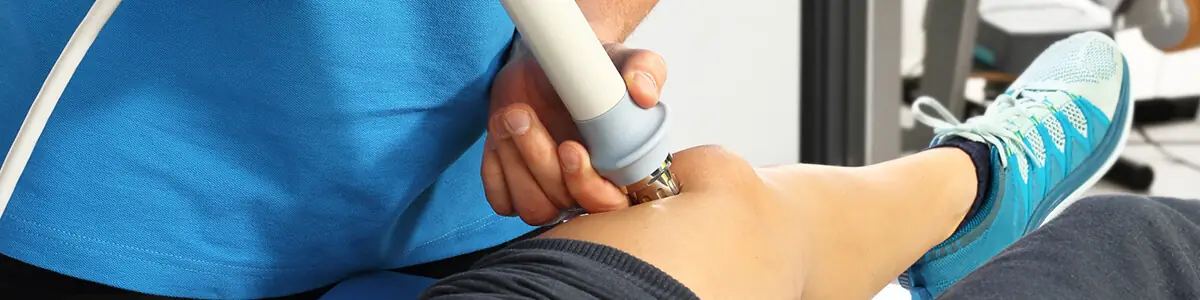
You sit or lie comfortably while the practitioner moves the laser over the painful area. Everyone in the room wears protective glasses. Most areas take a few minutes. Afterward you can return to normal activity right away.
How many sessions add up to results
Research studies usually use repeated sessions, but the best number of sessions and how long any benefit lasts remain uncertain and vary by condition. We set a starting plan and adjust it based on how you respond.
Who is a good candidate?
Adults with muscle, joint, tendon or nerve pain who want a drug-free option are often good candidates. It may be especially appealing if you cannot take anti-inflammatory drugs, want to avoid injections or simply want to try the gentlest approach first. Dr. Rosum screens every patient at the free first visit.
Cold laser therapy Louisville FAQ
How many sessions will I need?
There is no proven fixed number. It depends on the problem and how you respond.
Is my first session free?
Yes. Your first laser session at Laser Center of Louisville is free.
Still deciding? The simplest way to compare is to try it. Cold laser therapy Louisville patients book with us can start with a free first session so you can see how your body responds.