
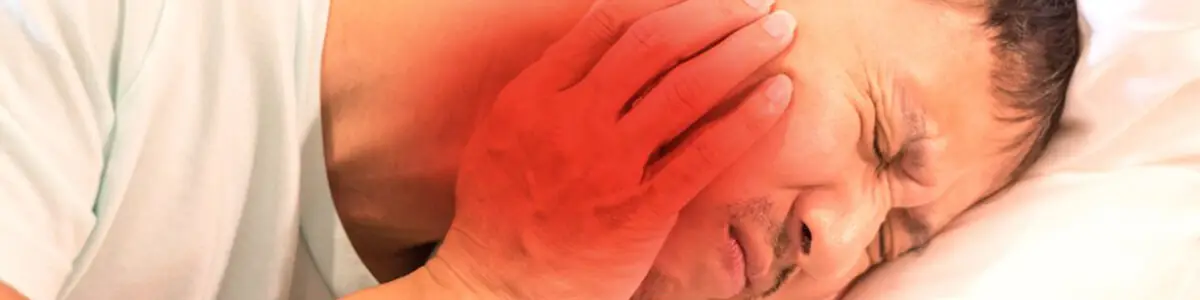
Bell’s palsy treatment Louisville patients ask us about starts with one important step: see a physician right away. Bell’s palsy causes sudden weakness on one side of the face, and the same symptoms can come from a stroke. Once a doctor has confirmed Bell’s palsy and started standard treatment, there are supportive options, including low-level laser therapy, that some patients consider during recovery.
What is Bell’s palsy?
Bell’s palsy is sudden weakness or paralysis of the muscles on one side of the face, caused by inflammation of the facial nerve. People often notice it when they wake up: one side of the mouth droops, an eye will not close fully, or drinking and smiling feel uneven. The exact cause is not always known, but viral infections are thought to play a role.
Common symptoms
- Drooping on one side of the face
- Trouble closing one eye or blinking
- Drooling or trouble drinking
- Changes in taste
- Pain around the jaw or behind the ear
- Sensitivity to sound on one side
Sudden facial drooping is an emergency until proven otherwise
Call 911 or go to the emergency room for any sudden facial weakness, especially with arm or leg weakness, trouble speaking, confusion or vision changes. These are signs of stroke. Bell’s palsy is diagnosed only after other causes are ruled out.
Standard Bell’s palsy treatment
Doctors often prescribe oral corticosteroids, ideally started within about 72 hours of symptoms. Protecting the eye with drops, ointment or a patch is important if it cannot close fully. The good news: most people recover significantly within a few weeks to months. The National Institute of Neurological Disorders and Stroke has a helpful overview.
Bell’s palsy treatment Louisville patients use alongside medical care
Some patients look for supportive options to use alongside their physician’s care. Low-level laser therapy (photobiomodulation) has been studied for facial nerve recovery. Laser therapy has shown possible benefits in some Bell’s palsy studies, but it is not an established standard treatment, and results from one study cannot automatically be applied to a different laser device or protocol.
What laser sessions involve
Sessions are short and painless. Protective eyewear is always used near the face. The laser is applied along the path of the facial nerve, in front of the ear and across the cheek. We coordinate with your physician and never replace medical care.
Facial exercises
Specialized facial neuromuscular retraining may help people with severe or persistent facial weakness and should be guided by a clinician trained in facial nerve rehabilitation.
Protecting your eye during recovery
If your eyelid will not close fully, the eye can dry out and become damaged. Doctors often recommend lubricating drops during the day, ointment at night and taping or patching the eye while you sleep. If the affected eye becomes painful or red, or your vision changes, get urgent same-day medical or eye care, because the exposed cornea can be damaged.
Recovery timeline
Many people begin to improve within two to three weeks, and most recover within three to six months. A smaller number have lingering weakness or twitching. Follow up promptly for new or worsening symptoms, and ask about reassessment or a specialist referral if recovery is still incomplete three months after symptoms began.
Related facial and nerve pain
We also see patients with jaw pain and facial nerve pain. Read about our TMJ treatment and neuropathy treatment, or learn how laser therapy works.
Bell’s palsy treatment Louisville: questions to ask your doctor
- Could this be something other than Bell’s palsy?
- Should I start steroids, and how soon?
- How should I protect my eye?
- When should I expect improvement, and when should I follow up?
- Are supportive therapies like facial exercises or laser therapy reasonable for me?
Supportive Bell’s palsy treatment Louisville patients consider should always work alongside, never in place of, the care from your physician or neurologist. Most people recover well, and early medical treatment gives you the best odds.